If you’re considering sound healing training in India, you may come across courses described as Level 1, Level 2 and Level 3. While the names sound straightforward, the skills, techniques and experience expected at each stage can be quite different.
At Himalayan Yoga Association, the training progresses from foundational sound-healing techniques and singing bowl practice to chakra-focused work and, at the advanced level, sound baths and the use of additional instruments.
In this guide, we explain what is taught at each level, who each stage is suitable for, and how the three levels fit together. If you’re deciding between taking one level at a time and completing a combined training program, you’ll also find a practical comparison below.
What Is Sound Healing Certification?
Sound healing certification is a formal training program designed to equip students with the skills to utilize sound and vibration in healing. Students learn how to use tools such as Tibetan singing bowls, crystal bowls, gongs and tuning forks. In addition to the musical aspects, students also explore the science and philosophy of music’s impact on the body and mind.


The courses at Himalayan Yoga Association are divided into three levels of sound healing. Skills and techniques vary from level to level. Students choose to take one level at a time or they may opt for taking the sound healing master course in India, which is an integrated course with all three levels.
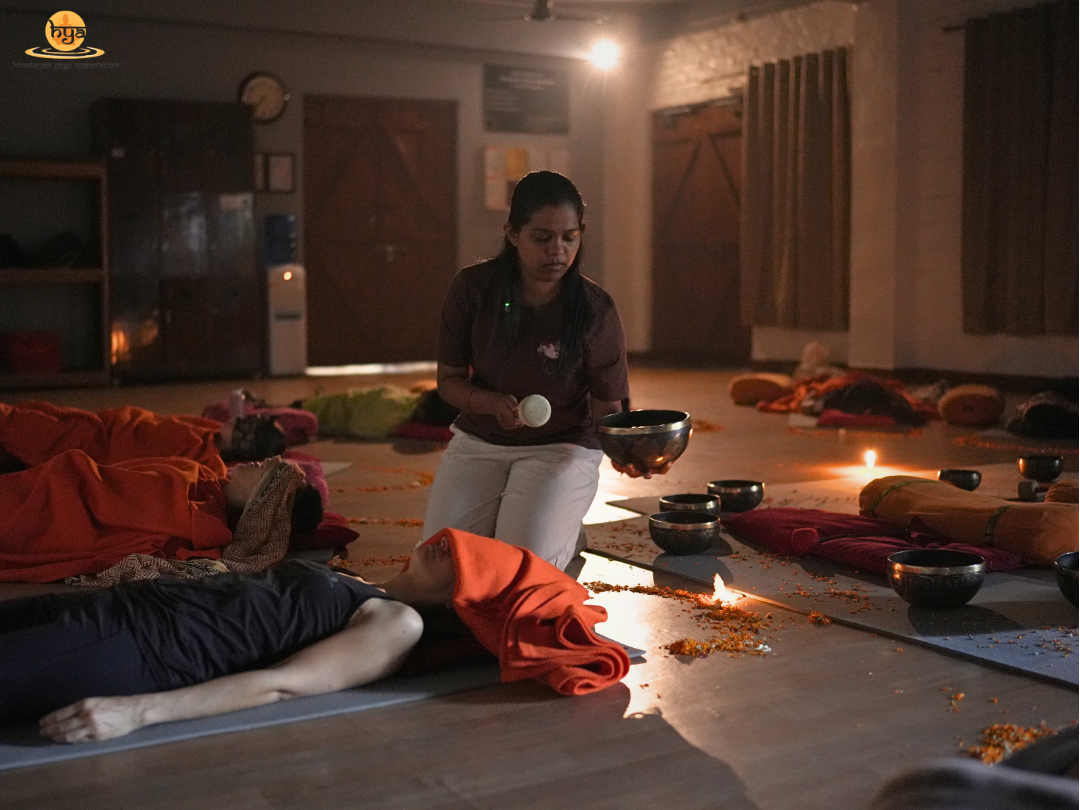
The courses are held in Rishikesh, a place in itself revered throughout the world for yoga and spiritual learning. It’s a wonderful training location set within a tranquil, Himalayan backdrop. The quiet atmosphere allows students to learn more quickly, without the distraction of a busy city classroom atmosphere.
Training also consists of theoretical and practical work. Teachers teach students about vibration and sound frequency and teach them to experience it in practice. This is a balance between learning the “why” and practicing the “how” – making the certification not only a theoretical but also a practical certification.
| Level 1 | Level 2 | Level 3 | |
|---|---|---|---|
| Stage | Foundation | Intermediate | Advanced |
| Best for | Beginners | Students building deeper skills | Experienced/continuing students |
| Main focus | Fundamentals, bowls, safety | Chakra-focused practices | Sound baths & advanced techniques |
| Instruments | Tibetan singing bowls | Singing bowls | Bowls + additional instruments |
| Practical outcome | Foundational practice | More focused sessions | Broader session formats |
| Progression | Starting point | Builds on Level 1 | Builds on previous training |
Level 1 Sound Healing Course: The Foundation
Level 1 is designed for complete beginners. This Course is an introduction to the fundamental concepts of sound healing, with no requirements for prior knowledge. Students are introduced to the use of sound practices for relaxation and learn how sound and vibration are approached within the training.
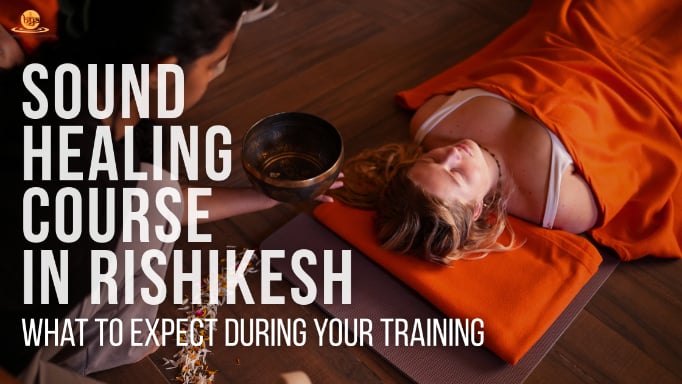
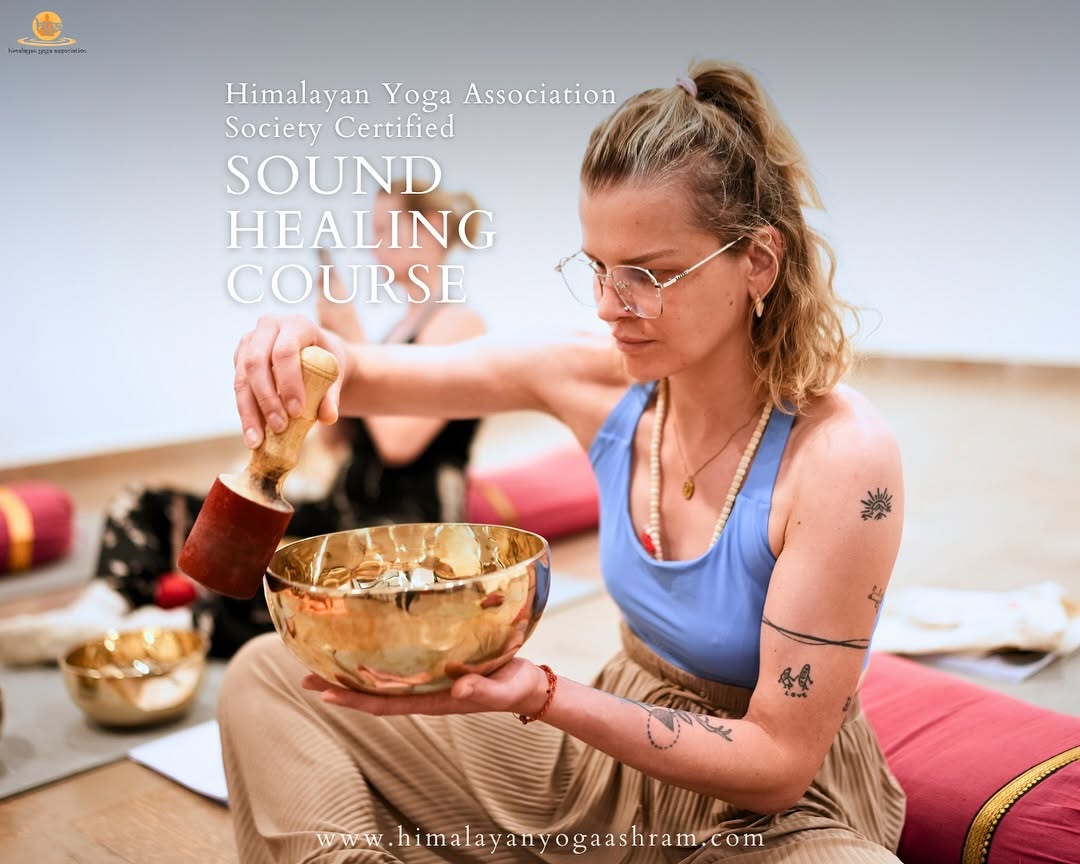
In this level students gain practical experience with Tibetan singing bowls. They will be taught to correctly hold, strike and rim the bowls to create healing tones. Safety is also addressed in great detail as it is important when using instruments and clients, care and awareness must be used.
At the completion of Level 1 students will have an understanding of how to conduct a simple and professional healing session. This level is suitable for yoga teachers, those interested in the healing application of sound and those who are just curious. It also acts as a solid platform for those that wish to progress to Level 2/3 in the future.
Level 1 is one of many levels of sound healing in India which many students opt for because it doesn’t require any background. Gives a step by step introduction to the concept with a soft hand, then progresses to more complicated ones.
Level 2 Sound Healing Course: Working with Chakras
Level 2 builds directly on the foundation from Level 1. This course explores more in-depth chakra theory and students will learn how to recognize blocked or imbalanced chakras. Students are taught to identify signs of mental and/or physical blockage in themselves and their potential future clients.
One of the important objectives of this level is to perform chakra balancing through sound. Students learn to clear obstructions using singing bowls and the associated tones and frequencies that are available for each of the seven chakras. A hands-on approach to get students from theory to real, practical application.
Also at Level 2, students are introduced to using sound for the clearing and cleansing of spaces, rather than just individual bodies. This skill can be very helpful to healers who want to remain calm and balanced before beginning any healing session. In addition to learning basic relaxation skills, students also learn mental therapy and physical therapy techniques.
After completing Level 2, students come out with a much greater level of skill in practice. They can perform chakra balancing session and comfortably deal with clients with specific concerns. This is suitable for students who have passed Level 1, or who have some experience in energy work or yoga therapy.
Students also begin to develop intuition during this level. They don’t have a specific sequence to follow, but are able to read a client’s energy and adapt their practice to fit. This is a valuable attribute to develop later, particularly when operating with a client base whose response to sound and vibration vary from person to person.

Level 3 Sound Healing Course: Advanced Practice
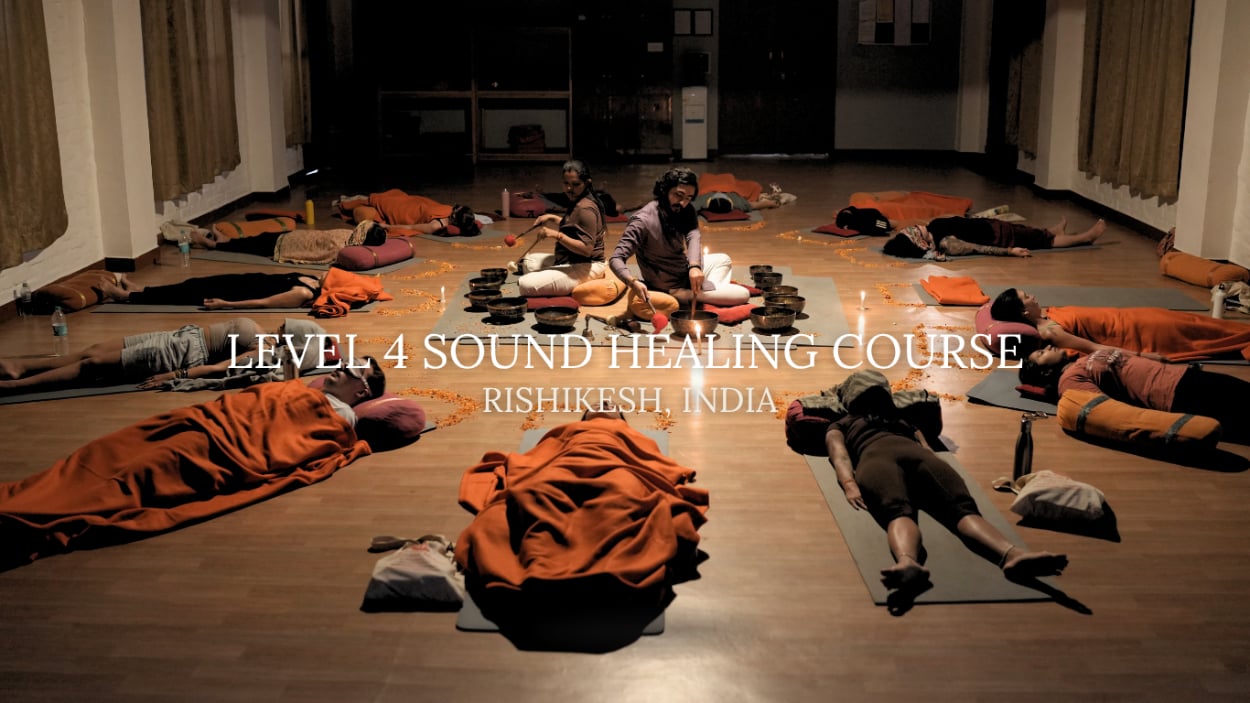
Level 3 is the most advanced stage among Level 1–3 sound healing training offered at Himalayan Yoga Association. Taught by a certified Sound Healer, this course is an introduction to Sound Bath Therapy, which is a truly immersive group healing experience that has gained popularity throughout the world.
Students are taught how to perform a full sound bath session, taking the participants through the complete journey of relaxation through layered sounds and vibrations. This level also includes specialized therapies, in addition to sound baths. The Level 3 curriculum also introduces specialized sound-based practices taught within the school’s wellness framework.
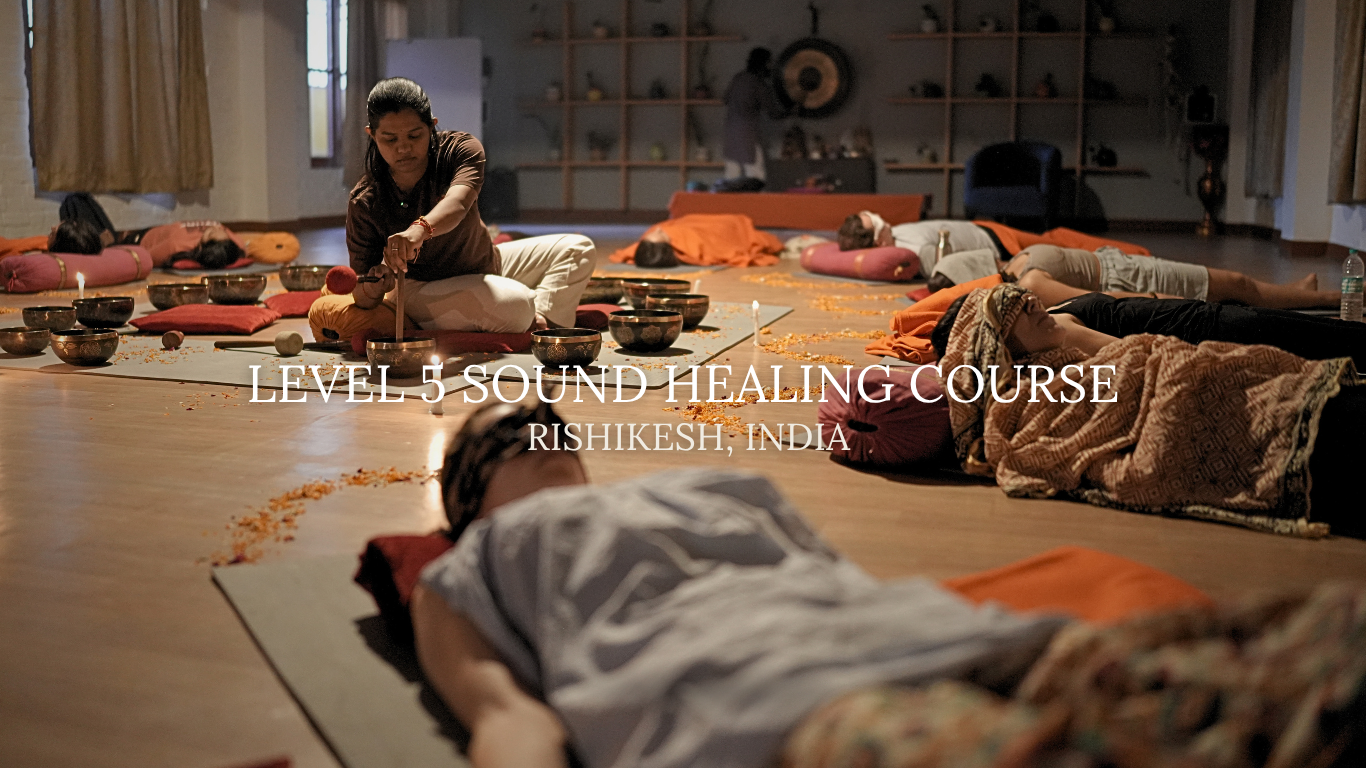
New instruments are also added at this level. Students learn more than just the singing bowl, they learn the shamanic drum, the ocean drum, nine bar chimes, the rain stick and tingsha. With this type, students can craft more innovative, individual healing sessions for their clients in the future.
By the end of Level 3 students feel confident to use a range of instruments and techniques for a session. They can assist their client in numerous forms of needs such as stress reduction and more specific physical and emotional needs. This is a suitable level for students who have already taken and passed the Level 1 and Level 2 exams and/or experienced practitioners who would like to concentrate on their training.
Level 1 vs Level 2 vs Level 3: Key Differences
Understanding the three levels can assist you in making the right decision. At Level 1 the main emphasis is on the skills, basic instrument handling and safety. It is recommended for absolute beginners who would like to have a proper introduction to the field of sound healing.
At Level 2 the focus is on chakra work and balancing the energies. Students can now identify and clear the obstacles that they discover, from general relaxation exercises to specific healing techniques. This level is a development of knowledge gained at Level 1.
At level 3, the use of more sophisticated instruments, specialized therapies and sound baths. This course is designed for students who are looking to become well-rounded, professional, sound healers, that are able to meet the needs of a variety of clients.
Students eventually finish all the three levels, either singly or by means of the combined sound healing master course. This is a combined path that provides a more streamlined and comprehensive learning path without long breaks between levels.
Students who want to complete the full progression without taking each stage separately can explore our Sound Healing Course in India, which brings the Level 1, Level 2 and Level 3 training path together in one structured program.

Should You Take Each Level Separately or Join the Master Course?
This is a very common question that arises while the students are thinking about the complete sound healing training. Breaking each level down into individual lessons gives greater flexibility as students can learn and practice in between levels. It’s a good strategy for people who prefer time between levels for practice or who need a more flexible training schedule..
If one decides to join the sound healing master course in India, then one has to undertake the completion of all 3 levels in one. This is an option for students who prefer to be immersed in a topic without taking breaks as they complete each stage. It’s also generally less expensive than being a part of each level over time.
The master course is the entire syllabus of Levels 1, 2, and 3 at Himalayan Yoga Association. In one singly planned training, students learn the techniques, then build on them, with all the teachers involved in the process being experienced sound healing teachers.
Which Sound Healing Level Should You Choose?
The right sound healing level depends on your previous experience, the techniques you want to learn, and whether you are looking for foundational knowledge or a more complete training path. At Himalayan Yoga Association, the levels are structured progressively, with each stage developing the skills introduced earlier in the training.
Choose Level 1 If You Are a Beginner
Level 1 is the best starting point if you are completely new to sound healing. It introduces the foundational principles of sound and vibration while helping you become familiar with the basic use of Tibetan singing bowls.
Level 1 may be right for you if you:
- have no previous sound healing experience;
- want to learn foundational singing bowl techniques;
- want to understand basic instrument handling and safe practice;
- are exploring sound healing for personal development or as a complement to an existing wellness practice; or
- want to build a foundation before progressing to more advanced training.
For most complete beginners, starting with Level 1 provides a more structured progression than moving directly into advanced techniques.
Consider Level 2 If You Want to Deepen Your Practice
Level 2 builds on the foundational skills developed during the earlier stage of training. The focus moves toward more detailed practical application, including the chakra-focused practices and techniques included in the Level 2 curriculum.
Level 2 may be suitable if you:
- have completed the required foundational training;
- are comfortable with basic singing bowl handling and techniques;
- want to develop your practical sound healing skills further;
- want to explore chakra-focused sound practices; or
- plan to continue toward advanced sound healing training.
If you have previous sound healing, yoga therapy or energy-work experience but have not completed Level 1 with us, contact the school before enrolling so that we can confirm which level is appropriate for your existing training.
Consider Level 3 If You Are Ready for Advanced Training
Level 3 is intended for students who are ready to progress beyond foundational and intermediate practices. Training expands into more advanced session formats, including sound-bath practice and working with additional sound instruments covered in the Level 3 curriculum.
Level 3 may be right for you if you:
- meet the required prerequisites for advanced training;
- already have a strong foundation in the techniques taught at earlier levels;
- want to develop more advanced practical skills;
- want experience with sound-bath formats; or
- want to learn how additional sound instruments can be incorporated into a structured session.
Students should confirm the Level 3 prerequisites before enrolling rather than choosing this level solely on the basis of previous general wellness experience.
Consider the Combined Course If You Want the Complete Progression
If your goal is to progress through the complete training pathway, completing the levels together can provide a more continuous learning experience.
The combined option may be suitable if you:
- want to complete the Level 1, Level 2 and Level 3 progression;
- can commit to the full training schedule;
- prefer continuous learning rather than taking long breaks between levels; or
- want to develop your skills progressively within one structured training program.
You can review the complete curriculum, training schedule, eligibility requirements, accommodation and upcoming dates on our Sound Healing Course in India page.
Still unsure which level to choose? Beginners should generally begin with the foundational level, while students with previous training should compare their experience with the prerequisites for the next stage. If you are uncertain whether your previous training qualifies you for Level 2 or Level 3, contact Himalayan Yoga Association before enrolling.
Certification and Recognition
Himalayan Yoga Association is an internationally Yoga School certified by IYS (International Yoga School) under the umbrella of International Yoga Organisation (IYO). Certificates are recognised in 195 countries, and so have genuine and internationally valued meaning for graduates.
A certificate is awarded upon the successful completion of each level, and is recognized internationally. This certification enables graduates to truly feel assured in providing sound healing sessions either on their own or in a wellness center or in conjunction with their yoga teaching practice. This certificate offers a valuable complement to many graduates’ careers and serves as a credential to add to their wellness credentials.
Proper certification also helps to win trust of the future customers. When it comes to something such as sound healing, Students who meet the course completion requirements receive a certificate documenting the level of training they have completed. It is a significant factor in today’s world, where sound healing is a rapidly increasing trend.
What Is Required to Receive the Sound Healing Certificate?
Certification at Himalayan Yoga Association is based on participation in the training and completion of the requirements associated with each course level. Students do not receive a certificate simply for registering for the program.
Depending on the level, students are expected to complete the required training hours, attend the scheduled theory and practical classes, participate in supervised practice and demonstrate the techniques taught during the course.
| Requirement | What to show publicly |
|---|---|
| Attendance | Exact minimum attendance percentage, if one exists |
| Practical assessment | What techniques are evaluated |
| Examination | Written/oral/practical and passing requirements |
| Supervised practice | Approximate hours and who supervises |
| Assignments | Examples of actual assignments |
| Training hours | Exact hours for Level 1, 2, 3 |
| Certification | What appears on the certificate |
| Instructor | Name and qualifications of assessor |
Attendance
Students are expected to attend the required classroom and practical sessions so they can complete the full curriculum for their chosen level.
Supervised Practical Training
A significant part of the training is practical. Students work with the instruments under the supervision of experienced instructors, who observe their technique and provide feedback on instrument handling, sound production, sequencing and safe practice.
Practical Assessment
Before completing the course, students are expected to demonstrate that they can apply the techniques covered during their level of training. The practical assessment may include instrument handling, sound techniques, session structure and the safe application of the practices taught during class.
Theory Assessment
Where applicable, students are assessed on the theoretical concepts covered during the training, including sound and vibration principles, instrument knowledge, safety and the methods taught within the curriculum.
Course Assignments
Depending on the course level, students may complete practical or reflective assignments designed to reinforce the techniques and concepts introduced during training.
Required Training Hours
Each sound healing level has a defined number of instructional and practical training hours. These hours include teacher-led instruction, demonstrations, supervised practice and practical application.
Students who successfully complete the requirements for their chosen level receive a certificate documenting the training they have completed.
Choosing the Right Level for Your Journey
The choice between Level 1, Level 2 and Level 3 will depend on your current experience and long term goals. Level 1 is recommended for beginners so they will have a solid foundation. If you have a bit of experience with energy work or yoga therapy, you may be able to proceed directly to Level 2.
Regardless of which you select, you can find a genuine and structured roadmap to acquire this ancient healing process at the sound healing levels in India at Himalayan Yoga Association. Each level is designed to develop real skills and the graduates will come out of it with confidence, knowledge and a worthwhile new tool for themselves and for their personal and professional development.